- 0
- 0
- 0
- 0
- 0
 On September 6, 2025, the Sixth Tongji Forum on the Development and Innovation of Bridge Engineering Technology and the First Forum on the Development and Innovation of Prestressed Technology were successfully held in the Yifu Building Auditorium of Tongji University, with a simultaneous online meeting.
 Prestress Technology has added Prof. Luc Taerwe from Ghent University, Belgium as Co-Editor-in-ChiefOn November 13, 2024, it was decided at the meeting of the editors-in-chief of Prestress Technology that Prof. Luc Taerwe would be added as Co-Editor-in-Chief of the journal, injecting a new force into the international development of the journal. Previously, Prof. Luc Taerwe was a member of the Editorial Board of Prestress Technology.
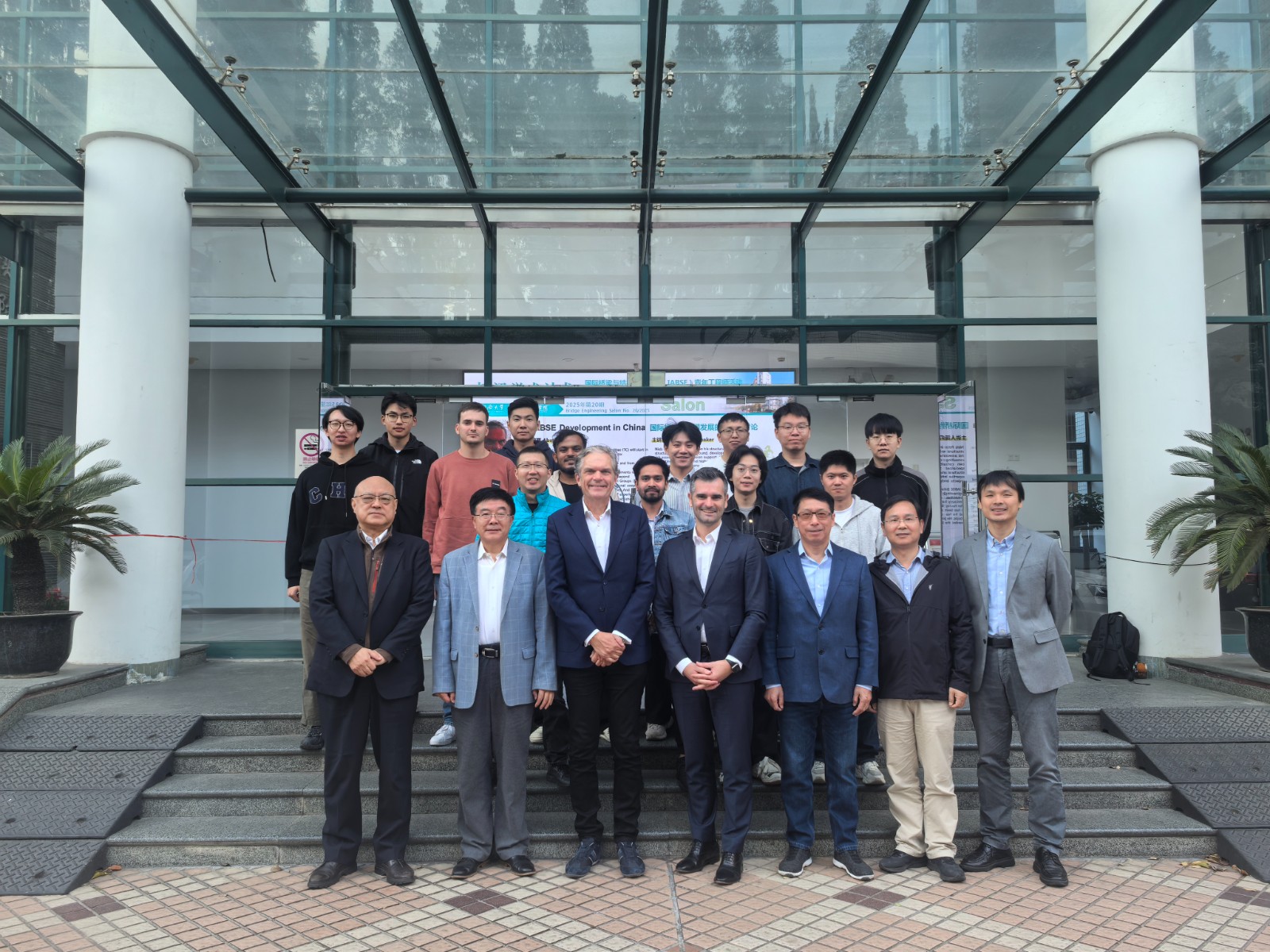 Mr. Niels Peter Hoj, Chairman of the International Association for Bridge and Structural Engineering Technical Committee (IABSE TC), visited Tongji University on October 22, 2025, and engaged in a journal exchange.
 Prestress Technology : An International Journal (PT) is an Open-Access, peer-reviewed journal that publishes articles which contribute new results in prestressing fields of the Civil Engineering,Nuclear Engineering, Energy Engineering. The journal is devoted to the publication of high quality papers on theoretical and practical aspects of Prestress technology. The goal of this journal is to bring together researchers and practitioners from academia and industry to focus on prestress technology advancements, and establishing new collaborations in these areas. Original research papers, state-of-the-art reviews are invited for publication in all fields of prestress technology.
- Current Issue |
- Online First |
- Special Articles |
- Discussion Corner |
- Archive
-
2026,4(01) ,DOI: 10.59238/j.pt.202601_fdny
Abstract:
-
Seyyedbehrad Emadi, Amir Hossein Farmanara Bozorgzad, Pooya Lotfabadi, Haiying Ma
2026,4(01):1-23 ,DOI: 10.59238/j.pt.20251230002
Abstract:Accurate prediction of crack width is essential for serviceability design and durability assessments of prestressed concrete structures. This study presents an explainable machine learning framework for predicting the maximum crack width of prestressed concrete beams based on experimental data. A comprehensive database of 404 specimens, including the bending moment, prestress index, load ratio, effective depth, and section stiffness, was constructed and enhanced through mechanically informed feature engineering. Random forest and XGBoost regression models were developed and systematically tuned using cross-validated hyperparameter optimization. Among the evaluated models, XGBoost achieved the highest predictive accuracy, with a coefficient of determination of 0.6507 and a root mean square error of 0.184 mm. Model interpretability was investigated using feature importance measures and SHapley Additive exPlanations, which identified the bending moment, load ratio, concrete compressive strength, and prestress index as the dominant factors influencing crack width. The observed relationships are consistent with the established flexural cracking theory, confirming that the proposed model captures physically meaningful behavior. The results demonstrate that combining explainable artificial intelligence with structural mechanics provides a robust and transparent tool for crack width prediction, offering valuable support for the performance-based evaluation and design of prestressed concrete members.
-
Qiong Yao, Chao Yang, Yingying Liang, Jinzhu Lu, Jiannan Jin
2026,4(01):24-35 ,DOI: 10.59238/j.pt.20250929002
Abstract:To investigate the significant influence of structural characteristics on the calculation of additional effective damping ratios in seismic energy dissipation structures, this study examines four typical structural types: steel frames, concrete frames, concrete frame–shear walls, and concrete shear walls. Additionally, the compatibility between the structural features and three calculation methods—the code method, energy ratio method, and time-variant method—is analyzed. Results show that the optimal method depends strongly on the structural type. For steel frames with low inherent damping and high ductility, the energy ratio method proves to be the most accurate. In the case of concrete frames, all three methods yield small calculation errors; however, the code method is recommended because its computational efficiency and accuracy are comparable to those of the time-variant method. For concrete frame-shear walls with notable stiffness variations, the time-variant method achieves the highest precision, although the code method remains a practical primary alternative. Regarding concrete shear walls, the code method tends to overestimate the damping effects, making the energy ratio method or time-variant method the preferred choice. This study establishes clear adaptation guidelines between structural characteristics and calculation methods, effectively resolves applicability issues, improves computational accuracy and design efficiency, and provides an important basis for the engineering application of viscous dampers.
-
Jose Antonio Lozano-Galant, Carlos Gisbert, Ye Xia, Fidel Lozano-Galant, Alejandro Mungaray
2026,4(01):36-54 ,DOI: 10.59238/j.pt.20251010001
Abstract:Prestressed concrete (PSC) structures are fundamental to bridges, buildings, and other critical infrastructure, requiring design approaches that balance mechanical performance, durability, and cost throughout the service life. Because PSC systems involve numerous interacting variables—from material properties to construction practices and long-term environmental effects—their optimization demands methods capable of studying many factors simultaneously and identifying robust combinations. The Taguchi method, a branch of design of experiments (DoE), offers an efficient framework for this purpose, yet its application to PSC remains limited and not well established. This paper addresses that gap by outlining the principal potential applications of the Taguchi methodology throughout the PSC structures life cycle—covering Design and Material Dosage, Production and Prefabrication, Construction and Erection, Service and Operation, and Rehabilitation and End-of-Life stages—highlighting opportunities for future research and practical implementation. Building on this context, an illustrative cost-optimization case study is presented in which a Taguchi orthogonal array is applied to the design of an industrial precast PSC building. In this example, four key design factors—Distance Between Frames, Beam Type, Purlin Type, and Pillar Section—are analyzed to identify the most influential parameters and to determine the configuration that minimizes production and transportation costs. This study encourages researchers to apply Taguchi methods throughout the PSC life cycle.
-
Eloi Figueiredo, Ionut Moldovan, Pedro Alves, Mohammadmahdi Abedi, Ye Xia
2026,4(01):55-67 ,DOI: 10.59238/j.pt.20260312001
Abstract:App4SHM is a mobile system for structural health monitoring (SHM) of bridges that aims to support routine inspections. It consists of a front-end smartphone application that is used to measure natural frequencies of vibration and to detect damage supported by a backstage server software, accessible through any internet browser. This paper focuses on the new module for stay cables, which directly converts natural frequencies into cable tension forces based on the cable's material and geometrical characteristics. The conversion uses an estimate of the forces from the taut string theory. Regardless of the module, App4SHM works in two modes. The training mode is used to collect observations composed of natural frequencies under normal operational and environmental conditions. The observations are used to train an unsupervised machine learning algorithm to learn the structure's normal behavior. The damage detection mode collects unlabeled observations, which are tested against normal behavior to detect abnormal performance that may be indicative of damage or excessive tension. The Edgar Cardoso Bridge — a large cable-stayed bridge in Portugal, undergoing rehabilitation and stay cables replacement — is used as a case study for the measurement of cable tension forces.
-
2026,4(01):68-79 ,DOI: 10.59238/j.pt.20250903001
Abstract:To address the technical difficulties associated with the replacement process of group-anchored steel strand cables for long-span cable-stayed bridges, such as the lack of force-release structures in the anchorages, large elongation, and difficulty in single-strand unloading, this paper takes the cable replacement project of the Yiling Yangtze River Bridge as the background and proposes an integrated cable force release device and construction technology suitable for long-cable replacement. The device connects the replacement anchorages with the exposed steel strands of the old cables and combines reaction support frame, tensioning rod, and jacking system to achieve graded and synchronous unloading of cable force, effectively addressing the limitations of the original anchorages, which cannot directly release cable force and have insufficient adjustment capacity. Engineering practices shown that this method ensures safe and controllable construction, smooth cable force unloading, and minimal structural disturbance, successfully achieving the replacement of all 236 stay cables on the bridge. Post-construction inspection confirms that the cable forces and deck alignment meet the design requirements, verifying the reliability of this technology. The technical system described in this paper can provide references for the design and construction of cable replacement in similar bridges.
-
2026,4(01):80-93 ,DOI: 10.59238/j.pt.20251117001
Abstract:To investigate the mechanical behavior of the pile cap for the main pylon of an A-shaped cable-stayed bridge without crossbeams, a realistic bridge of this type was selected as a case study. A grillage finite element model of the entire bridge was established using MIDAS to compare and analyze the effects of three different pile foundation layout schemes on the mechanical response of the pile cap. Subsequently, a local solid model of the pile cap was developed using MIDAS FEA NX to examine its transverse stress distribution under frequent load combinations. The results of comparison and selection revealed that the optimal scheme involves symmetrically arranging “2+2” piles at the dumbbell-shaped necking region in the center of the pile cap. This configuration effectively reduces the span, resulting in a more uniform and reasonable distribution of stress and deformation in the pile cap under frequent load combinations. The load-bearing mechanism of the pile cap is characterized by transverse prestressed steel tendons acting as key “balancing elements”. By establishing a prestress field within the pile cap, these tendons directly resist the horizontal thrust generated by the pylon, working together with the passive pile foundation to form a three-dimensional load-bearing system that internally balances, spatially distributes, and transfers the complex spatial forces from the superstructure. In addition, reinforcement meshes should be arranged in the prestress anchorage zones and in the regions between piles at the bottom of the pile cap to resist local tensile stress concentrations and control cracking. Traditional spatial grillage models exhibit limitations in analyzing the mechanical behavior of the thick and large pile caps in such A-shaped pylons, which may lead to distorted results and overestimation of local stresses. Therefore, the use of solid finite element models is recommended for accurate verification and design.
-
2026,4(01):94-106 ,DOI: 10.59238/j.pt.20251107002
Abstract:The main bridge of the Zhongxing Bridge is a hybrid girder extradosed cable-stayed bridge with a span arrangement of (64+86) m + 400 m + (86+64) m. A pedestrian and nonmotorized vehicle (hereafter referred to as a “pedestrian/bicycle”) crossing channel is designed to traverse the river along the main bridge. In this paper, the design scheme of this pedestrian/bicycle channel is investigated in terms of structural mechanics, structural detailing, economy, and maintenance. The design scheme features a vertical separation of vehicle and pedestrian/bicycle traffic, in which the pedestrian/bicycle system is located outside the webs of the box girder. To decouple the structural connection between the main bridge and the pedestrian/bicycle channel, thereby reducing the effect of the main bridge forces on the channel structure, longitudinal and transverse expansion joints were installed and the installation sequence of the channel was optimized. A computational analysis was performed using the finite element software Midas Civil. The results indicate that the previously mentioned methods can significantly reduce structural stress. Furthermore, analyses of pedestrian comfort and the structural performance of the pedestrian staircase were conducted. The results indicate that this pedestrian/bicycle channel can satisfy both static and dynamic requirements.
Volume 4,2026 Issue 01
>Scientific Research
>Product Research and Development
>Design and Construction
>Project Report
-
Available online:June 22, 2026 DOI: 10.59238/j.pt.20260429001
Abstract:This paper presents Goliath footbridge, a full-scale 6 m span segmental 3D-printed concrete footbridge activated by post-tensioning, describing the end-to-end process from design and fabrication to transport, assembly, and structural activation. This structure represents the demonstrator of a research project that was conceived as an end-to-end demonstrator integrating material development, digital design, additive manufacturing, and site erection. The printable mortar was previously characterized through rheological and mechanical tests to verify extrusion performance, buildability, and strength development. The structural geometry was obtained through topology optimization under self-weight and pedestrian service loads, aiming to maximize stiffness and reducing material consumption. The resulting solution provided an efficient lightweight configuration adapted to additive manufacturing. After production, the segments were transported to site, rotated into their final position, assembled on temporary supports, aligned through the dry-joint system, and sequentially activated by post-tensioning. The demonstrator confirmed the technical feasibility of combining topology optimization, modular 3D concrete printing, dry-joint assembly, and post-tensioning for pedestrian bridge applications. It also highlighted practical challenges related to dimensional tolerances, local stress concentrations, cracking sensitivity, and durability of joints and anchorage zones. The study provides a practical proof of concept for future scalable 3D-printed concrete bridge construction.
-
Available online:June 22, 2026 DOI: 10.59238/j.pt.20251125001
Abstract:To achieve a graded seismic protection objective, namely, no damage under minor earthquakes, repairable damage under moderate earthquakes, and replaceable damage under major earthquakes, a novel rocking bridge system based on shape memory alloy (SMA) ring springs is proposed in this study. A constitutive model of the SMA ring springs is first developed and implemented in open-source finite element software OpenSees. An iterative design procedure for rocking piers is subsequently proposed, in which the slip ratio is adopted as an optimization index for the geometric configuration of the rocking piers. A typical bridge is then selected as a case study example. Finite element models of both a conventional bridge and an engineered cementitious composite (ECC) rocking bridge are subsequently established in OpenSees, and the seismic fragility of the two bridge systems is analyzed. The results indicate that the self-locking mechanism of the SMA ring springs effectively controls the rocking amplitude of the piers, thereby ensuring safe and reliable performance. Compared with conventional bridges, rocking bridges exhibit superior seismic performance and lower seismic fragility.
-
Available online:June 22, 2026 DOI: 10.59238/j.pt.20260106001
Abstract:As a core node project of Shenzhen""s "Mountain-Sea-City Connectivity Plan," Kunpeng Trail Bridge No. 3 is located in Qingshuihe Subdistrict, Luohu District. The bridge represents an innovative approach to enhancing ecological connectivity in a high-density urban environment. It adopts a cable-assisted continuous steel truss structure that spans Qingshuihe 3rd Road and Metro Lines 14 and 17. By connecting the western and eastern Maling areas of Honggang Park, the bridge effectively mitigates ecological fragmentation caused by transportation infrastructure barriers. This paper systematically presents the design concepts and key technological innovations associated with the bridge, including its overall layout, structural system, stay cables and anchorage systems, human-induced vibration control, ecological protection and durability measures, and incremental launching construction methods. The study provides valuable technical references for the design and construction of similar long-span ecological corridor bridges.
-
Available online:June 22, 2026 DOI: 10.59238/j.pt.20260210001
Abstract:To determine the ultimate bearing capacity of the anchorage zone in a long-span cable-stayed bridge, a typical segment of the anchorage zone was selected for horizontal force mechanism analysis and model loading test, and its load-carrying behavior and deformation characteristics were subsequently analyzed. Results show that under the action of horizontal cable force, the bending moment is relatively large at the outer face of the end tower wall and inner face of the side tower wall, and the chamfer between the side and end walls becomes a critical section because of the combined action of tension, shear and bending. The failure mode is primarily concrete cracking: cracks appear in the end tower wall at 0.15P and penetrate the full height of the segment at 0.25P, while full-depth vertical cracks appear in the side tower wall at 0.20P. The horizontal load of the segmental mode increases nonlinearly with the deformation of the tower wall, and the ultimate bearing capacity reaches 329.70 kN, approximately 0.48P, indicating that the concrete tower wall alone cannot sustain the enormous horizontal cable force. Compared with the side tower wall, the concrete of the end tower wall is more sensitive to the horizontal cable force load. As the horizontal load increases, the load carried by the concrete is gradually transferred to the reinforcement because of the tensile cracking of the tower wall.
-
Available online:June 22, 2026 DOI: 10.59238/j.pt.20260420001
Abstract:Based on the 170 m span network hanger tied-arch bridge of the Guangming Road Guohe Bridge in Bozhou city, structural design and mechanical characteristic analysis are carried out in this study to address the problems associated with traditional vertical hangers in medium-to-large span tied-arch bridges, namely, their susceptibility to slackness, insufficient stiffness, and inadequate stability. The main bridge is a single-span 170 m network hanger tied-arch bridge. The main girder is a double-box steel–concrete composite girder, and the arch rib is an octagonal steel box section without transverse bracing. The hangers are arranged in a crossed network pattern, and the substructure adopts a friction pendulum seismic isolation system. Static, stability, and seismic calculations are performed using the finite element method. The results show that the network hangers can significantly improve the internal force distribution of the main girder and arch rib, reducing both bending moments and deflections. The structural stiffness and stability satisfy the code requirements. The seismic isolation design effectively reduces the seismic response of the piers, and the seismic performance meets the relevant standards. This bridge type demonstrates good technical feasibility and economic rationality for wide urban bridges with spans of 150–200 m and can serve as a reference for similar projects.
-
Available online:June 22, 2026 DOI: 10.59238/j.pt.20251110002
Abstract:With the innovation in suspension bridge structures and continuous breakthroughs in spans, greater requirements have been placed on the load capacity and intelligence level of the core equipment for large-span main girder erection—cable-mounted cranes. Traditional cable-mounted cranes suffer from insufficient overall load capacity and relatively low intelligence in the lifting process, leading to low construction efficiency and prominent safety risks. Taking the Wenzhou Oujiang North Estuary Bridge as the research and development background and through structural integration and technological innovation, a 1000-ton cable-mounted crane has achieved automatic clamp crossing, self-adaptive traction angle adjustment during travel, intelligent leveling during lifting, and remote smart operation and maintenance. This crane effectively reduces safety risks caused by human operational errors and improves the overall safety factor. This paper systematically elaborates on the structural assembly, key technological innovations, and main technical parameters of the 1000-ton cable-mounted crane, providing practical and feasible technical solutions and a theoretical basis for enhancing the safety performance and smart operation and maintenance capabilities of cable-mounted cranes.
-
Available online:June 22, 2026 DOI: 10.59238/j.pt.20251021001
Abstract:With the increase in the service life of domestic infrastructure, the bridge approach bump formation has become increasingly common. This paper discusses the causes of bridge approach bump formation, which is primarily attributed to the differential settlement between rigid abutment foundations and flexible embankment foundations. This paper also provides a review of factors contributing to the formation of bumps, such as the cracking of approach slabs and soil erosion behind abutments. A prestressed UHPC (ultrahigh performance concrete) approach slab is proposed, and its structural performance is evaluated through finite element analysis, verifying the load-bearing capacity of this new type of approach slab. The novel prestressed approach slab exhibits excellent crack resistance, effectively reducing soil erosion behind abutments and mitigating uneven settlement of foundations near bridge abutments, thereby alleviating the problem of bridge approach bump formation. This study on prestressed approach slabs provides a theoretical basis for slab design and offers a valuable reference for mitigating the formation of bridge approach bumps.
 Special Issue
 Virtual Special Issue

Executive Editor in chief: Fangyuan Li; Albert de la Fuente